

Best inventory management techniques 2022
- superstoresolution

- Apr 24, 2022
- 5 min read

Accurate inventory management and inventory control hinge on best practice and using effective inventory management techniques. To help, consider the following 12 inventory and warehouse management best practices and activities.
Table Of Content
1. Cycle counts
Cycle counting is a method of checks and balances by which companies confirm physical inventory counts match their inventory records. This method involves performing a regular count and recording the adjustment of specific products. Over time, they have counted all their goods.
Warehouse managers and supply chain professionals often prepare the plan for staff to audit inventory. The most efficient inventory management plans lead to minimal transaction error rates and extremely high stock record accuracy without taking away from staff's essential tasks.
Regardless of whether a company uses periodic or perpetual inventory practices to track their inventory, regular cycle counting is a necessary auditing process to manage inventory counts.
But there are two certain counts that are the best inventory control method: high risk and high value.

2. FIFO
For inventory valuation, there are three common calculations:
Choosing the right inventory valuation method is a crucial step as it can have a significant impact on your reported profitability.
At Super Store Solution, we use FIFO – just like many other inventory management systems – as we feel this is the method that is most realistic against what’s happening in your warehouse, while ensuring your balance sheet also reflects the actual costs you’ve paid to acquire inventory.
3. ABC analysis
The idea behind the ABC analysis is to effectively prioritize your attention and resources on inventory that need it most.
According to the Pareto Principle, 80% of overall inventory consumption comes from just 20% of your total items. ABC analysis comes in useful to help you identify how to make your inventory control as efficient as possible.
Using this method as a starting point, you can split your inventory into three categories based on value, cost and consumption. As an example:
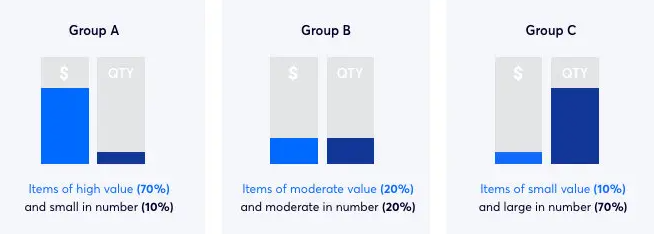
Use these groups to help categorize your finished products and then you can ensure your inventory management practices revolve around counting those items in Group A first, followed by Group B and C respectively.
4. Just in Time (JIT)
Although Just in Time ordering, or JIT, is still considered to be a risky strategy for some, it can be a great way of offsetting the risks associated with inventory management to your manufacturer or supplier instead.
With JIT in place, you’ll receive goods just before they need to be shipped or sold. This is helpful to small businesses that perhaps don’t have as much cash flow, warehouse space, or monetary capital as larger ones. Instead of tying up cash in inventory, you can instead invest that money on attracting more sales in the first place.
5. Surplus inventory and dead stock
Surplus inventory, also referred to as excess inventory, can result in dead stock if you don’t have an effective inventory management strategy in place in order to adjust your order quantity and shift these products in order to prevent it from happening again.
Dead stock, or dead inventory, is used to describe products that were never sold or used by consumers before being removed from the sales process, perhaps because they’re outdated or don’t have the functionality customers want. Read on for some ideas on what you can do with both dead stock and excess inventory.
Cross-merchandising is a great strategy to help increase sales of your surplus inventory and slow-moving items, allowing you to shift these products quicker.
6. Par levels
Par levels are the minimum quantities you wish to have in stock for each product. If your inventory counts go below that level, you know that you need to reorder that product.
Setting your par levels (for both on-premise and in-transit stock) provides structure and a method of prioritization within your reordering process and is an excellent way of keeping up with demand.
7. Safety stock
Safety stock is an extra quantity of a product which is stored in the warehouse to prevent an out-of-stock situation. It serves as insurance against fluctuations in demand
Safety Stock = 1.65 x Square Root of Lead Demand

8. Contingency planning
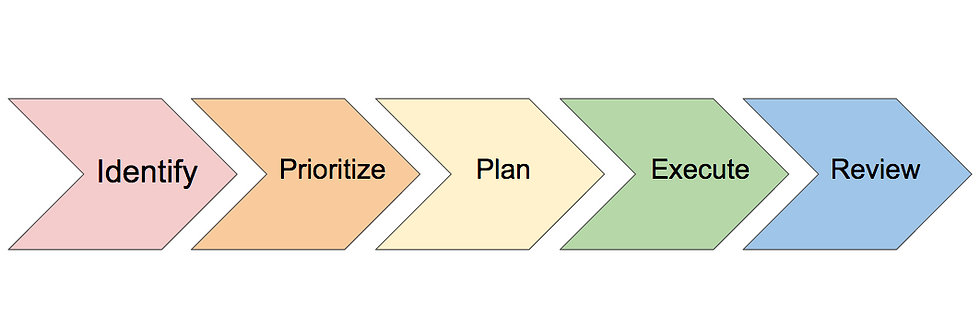
Contingency planning is defined as a course of action designed to help an organization respond to an event that may or may not happen. Contingency plans can also be referred to as 'Plan B' because it can work as an alternative action if things don't go as planned.
9. Consignment inventory
Consignment inventory is a supply chain model in which a product is sold by a retailer, but ownership is retained by the supplier until the product has been sold. Because the retailer does not actually buy the inventory until it has been sold, unsold products can be returned.

10. Drop Shipping
Drop shipping is an order fulfillment method where a store doesn’t keep the products it sells in stock. Instead, the seller purchases inventory as needed from a third party—usually a wholesaler or manufacturer—to fulfill orders.
Want in on the action? Here’s everything you need to know about drop shipping for ecommerce stores, and how you can start today.
Shortcuts
11. KPI analysis
KPI analysis is about making the most out of what the performance indicators are showing. The value of the constant analysis resides in the quality of the KPI data, the quality of the data and of course the skills of the business analysts who are looking at the mix.
We’ve written extensively on the topic of retail KPIs and inventory planning – check out some of our top resources below:
12. Returned inventory
There are two types of return transactions in Inventory Edge, Supplier Returns and Inventory Returns. In a supplier return, you are removing the inventory items from your on-hand quantity and returning the items to the supplier you purchased them from. An inventory return is when items that were previously issued out for use are returned back to your stock, adding that amount back to your on-hand quantity. Required fields are indicated by a red check box
Entering a Supplier Return (Long Form)
Click on the Returns link in the Transactions section of the home page.
From the My Returns list, click on the + Add New Supplier Return link on the right side of the list.

Select the Inventory Type of the item from the drop down list.
Type the Item Number into the field or click on the binoculars icon to open a pop-up window where you can search for and select the item.
The Transaction Date will automatically populate with today's date.
Enter the Quantity of items you are returning. The cost information will automatically populate.

Why You Need an Inventory Management System
Inventory management helps companies identify which and how much stock to order at what time. It tracks inventory from purchase to the sale of goods. The practice identifies and responds to trends to ensure there's always enough stock to fulfill customer orders and proper warning of a shortage
Features Your Inventory Management System Must Have
It should by now, be apparent how critical the right inventory tracking solution is to your firm. What, though, defines which option is right for you? That will depend on your industry, target audience, and many more factors besides.
There are some essential features to look out if you’re looking for a software solution. The following is a brief rundown of some of the most useful:


Comments